The Fuchsia Spotlight. 'Bernisser Hardy'
Sunday, July 26, 2026
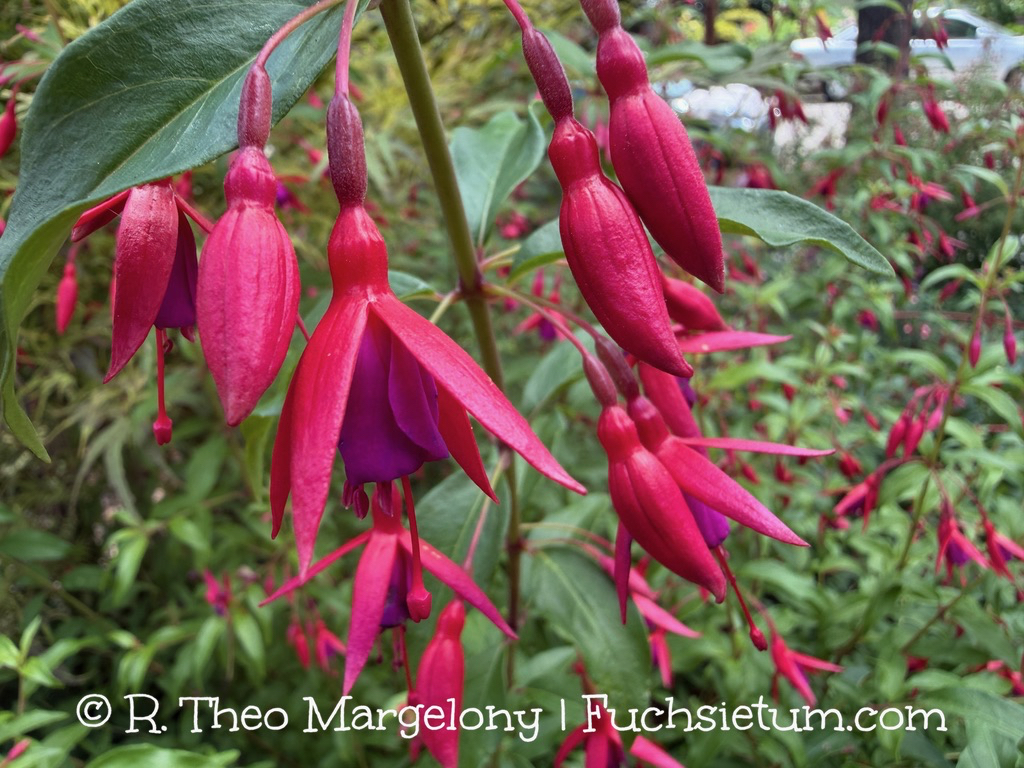
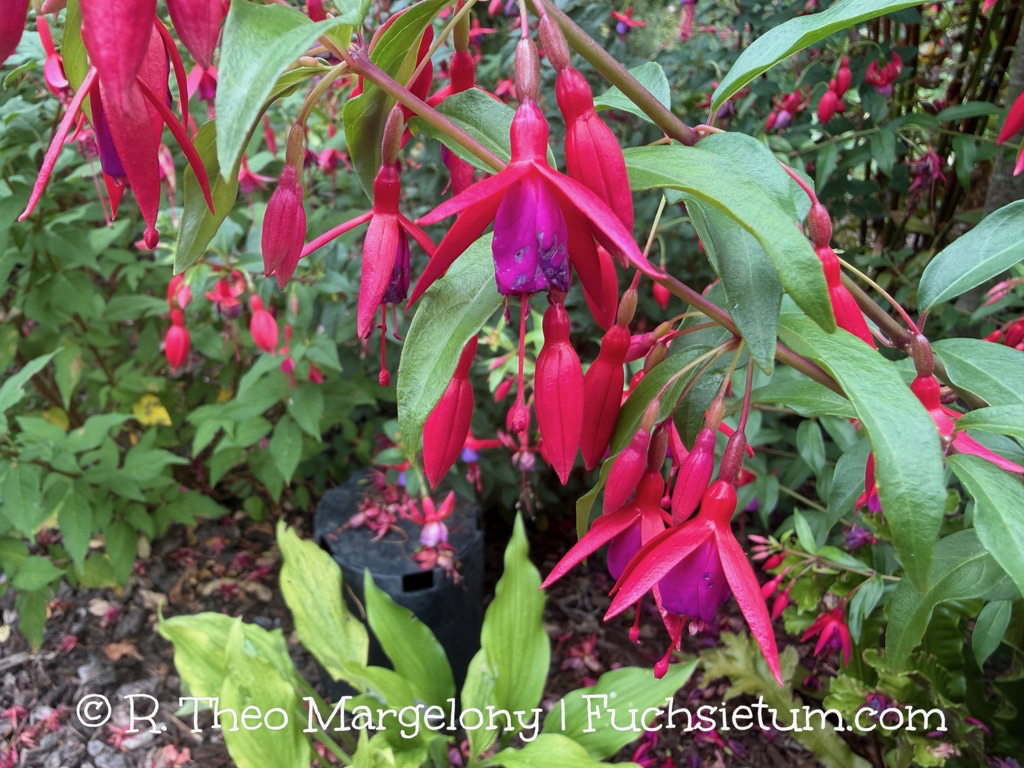
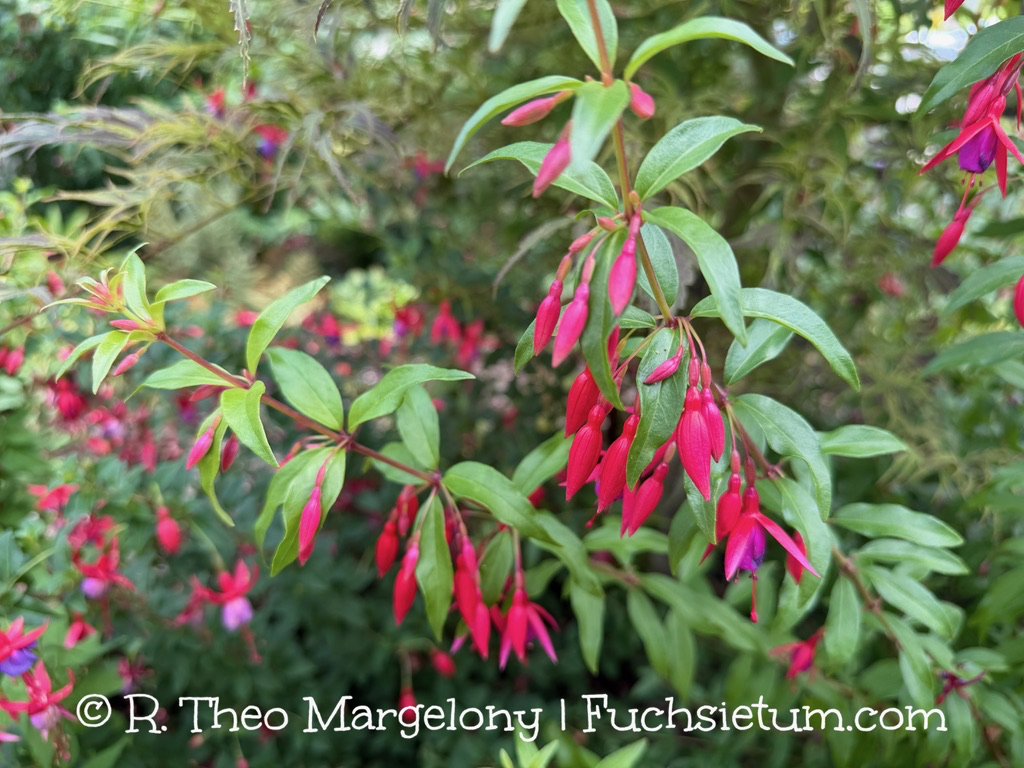
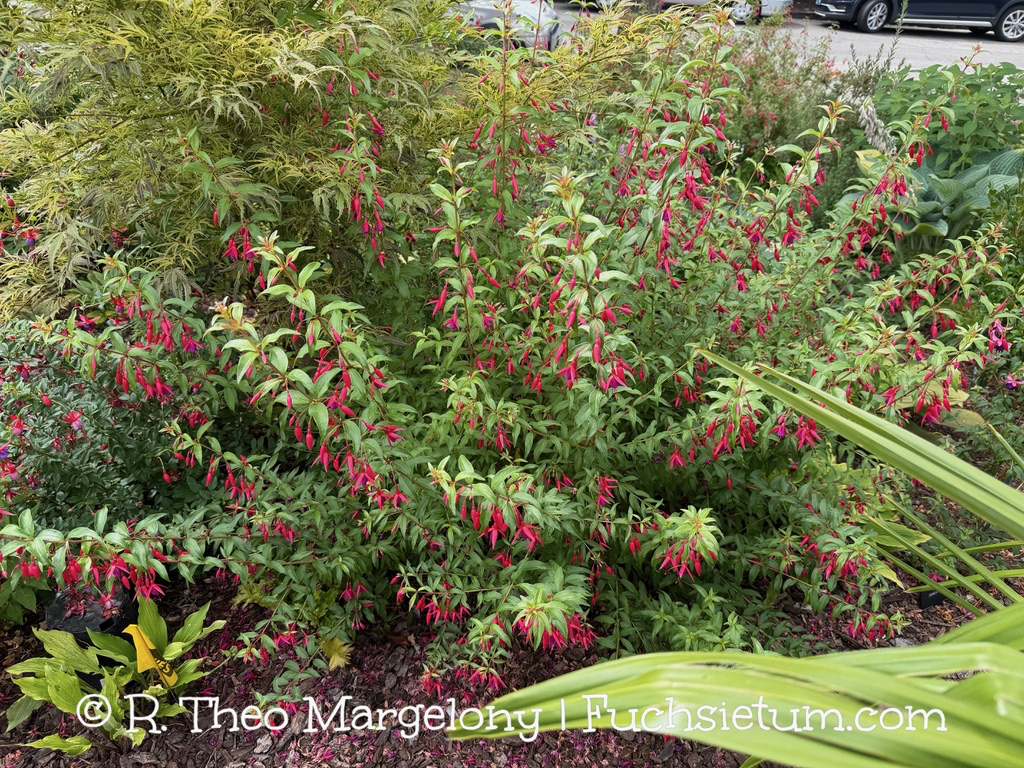
What’s flowering at the Fuchsietum? Fuchsia ‘Bernisser Hardy’ is a cross between F. magellanica 'Molinae' x F. regia from Bas Weeda of the Netherlands in 1985. It gets to about four feet plus in my garden in a season
The name comes from the eponymous village of Bernisse on the Bernisse River where Weeda lived. That region of South Holland, with its complicated web of waterways and islands forming the Rhine-Meuse Delta, has a comparatively mild climate so calling the cultivar “hardy” after just a couple of years of growing (it was quickly registered in 1987) was perhaps optimistically premature. Luckily it lives up to its name in much colder areas.
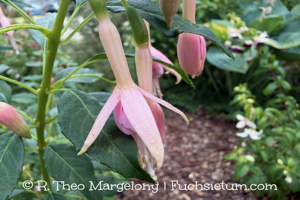
Fuchsia magellanica is a widely variable species in habit and flower throughout the whole of its natural range in southern Argentina and Chile. The species will occasionally seed plants with flowers ranging from almost pale white through pink into bi-colors such as ‘Lady Bacon’ or ‘Arauco’. None of these occasional variations are necessarily expressed in seedlings or crosses, though.
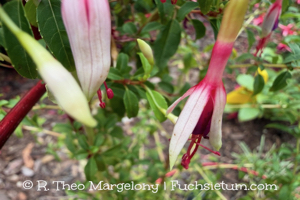
Interestingly, the pollen parent F. regia does have three valid subspecies: F. regia subsp. regia, F. regia subsp. reitzii, and F. regia subsp. serrae. Weeda didn’t record which one he used. The first is the most common in cultivation so I’d think that’s the one that fathered the cross.
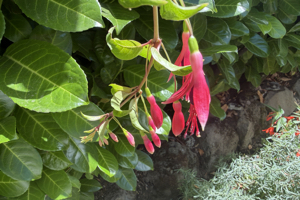
F. ‘Bernisser Hardy’ doesn’t seem to be on any of the lists of fuchsia cultivars recognized as being immune or resistant to FGM, though. Luckily, our area doesn’t have a problem with this disfiguring and pernicious pest. At the moment, anyway. Let’s hope it stays that way.